Advanced Access for Targeted Neurosurgical Procedures

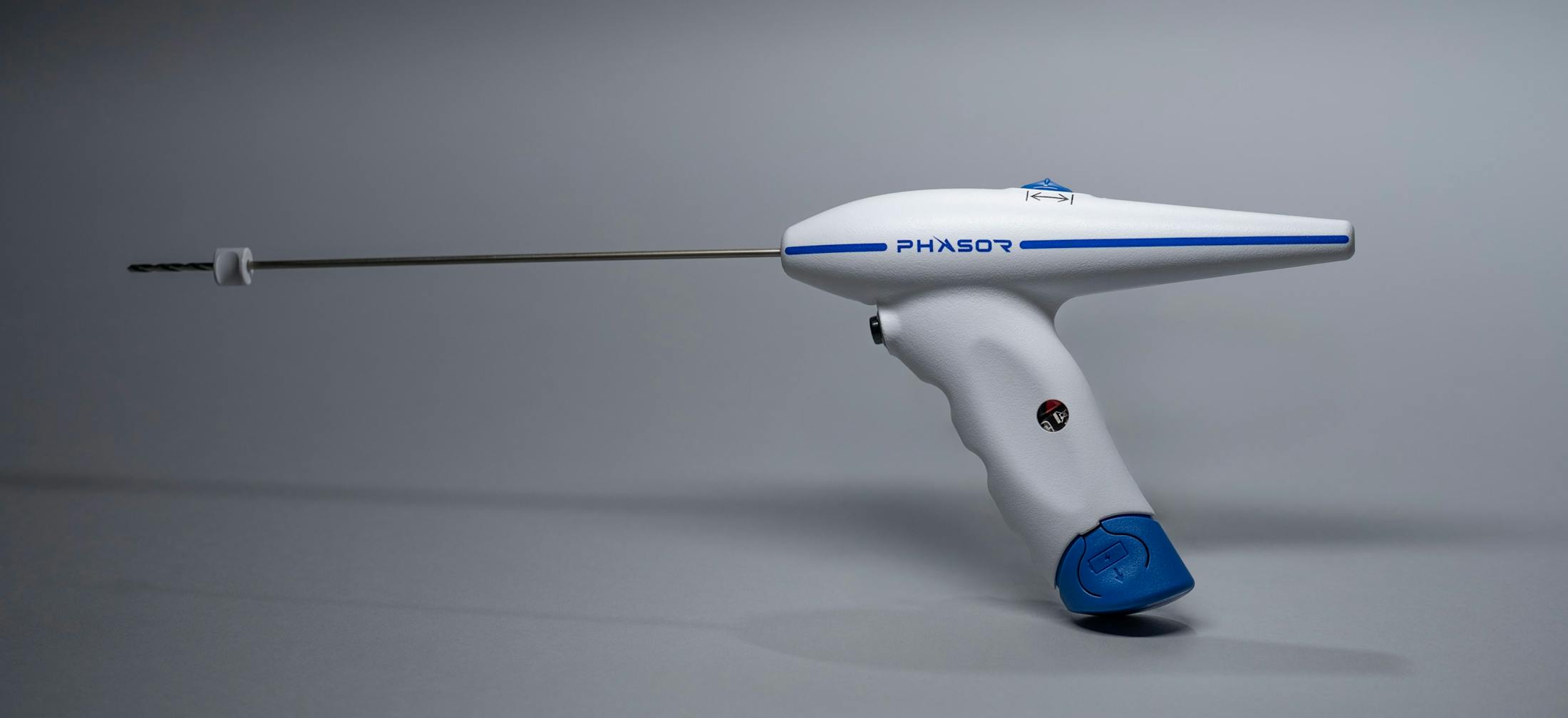
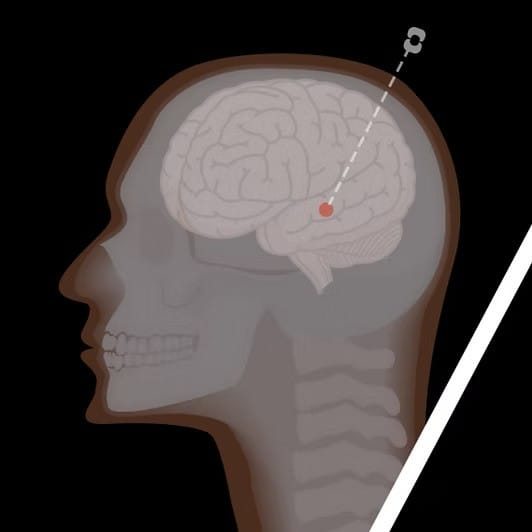
The Phasor Biopsy, LITT, and SEEG Drill Systems are precision-engineered, disposable electric cranial drills designed for neurosurgical applications requiring millimeter-level trajectory control and consistent depth management. Developed for both frame-based and frameless stereotactic systems, each Phasor drill combines lightweight handling with stable torque and tactilin eve feedback, giving surgeons confidence in every use. These powered systems replace bulkier or heavier orthopedic drills often borrowed for neurosurgery -- with our compact, sterile, single-use instruments for precise cranial access, deep brain biopsies, and minimally invasive LASER probe or electrode insertion procedures. Phasor's unique anti-plunge safety system and adjustable depth stop ensure each hole traverses the skull, with added tactile feedback aiding achieving the desired trajectory and minimizing plunging risk.
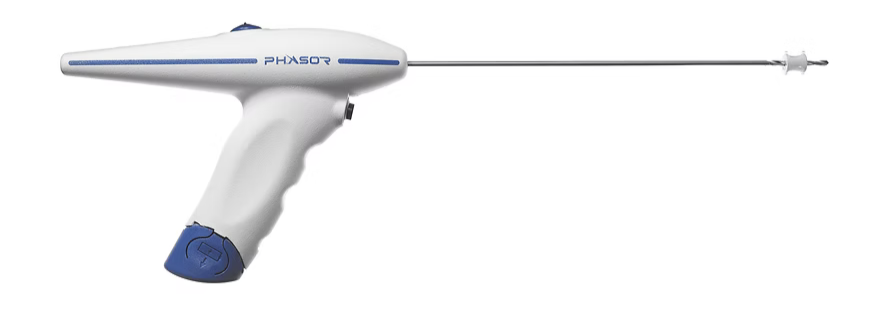
Phasor Biopsy, LITT, & SEEG Drill Systems

BIOPSY (Frame- or Frameless)

BIOPSY (Frame- or Frameless)

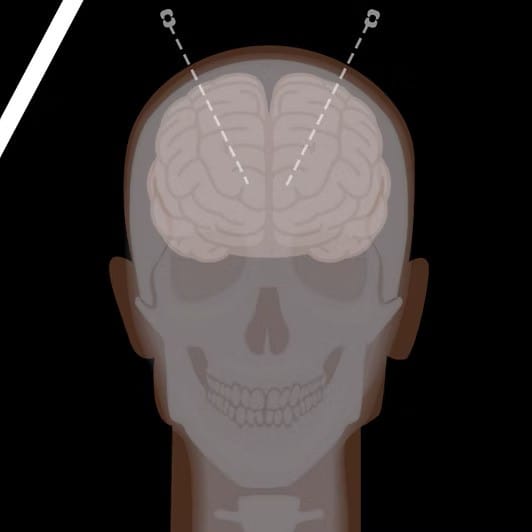
SEEG

SEEG

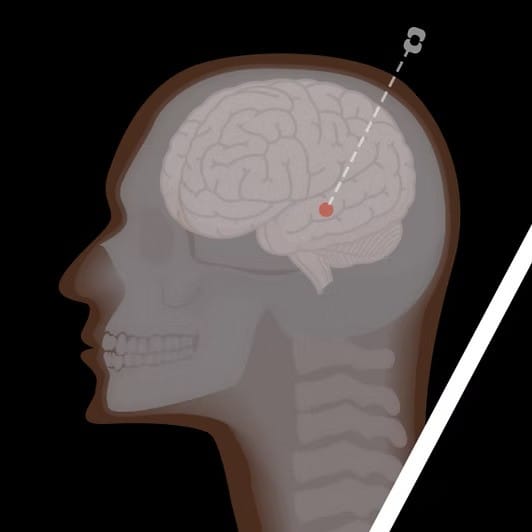
LITT (Monteris or Visualase)

LITT (Monteris™ or Visualase™)

Frame-based and Frameless Biopsy Applications

The Phasor Biopsy Drill provides precise access for both frame-based and frameless stereotactic systems, enabling surgeons to perform intracranial biopsy with exceptional control and reproducibility. The device’s balanced design, torque stability, and powered efficiency deliver the accuracy required for delicate tissue sampling in deep or superficial lesions.

System compatibility:

  • Frame-based systems: CRW™, Leksell™
  • Frameless and robotic systems: Brainlab Varioguide™, Medtronic Vertek™, ROSA™, STarFix™
  • Adjustable mechanical stopper for repeatable trajectory depth control

Applications include:

  • Stereotactic brain biopsies
  • Tumor or lesion sampling

Each Phasor biopsy drill produces a smooth, controlled entry path preserves critical alignment during deep access procedures.

Background media

LITT (LASER Interstitial Thermal Therapy)

Phasor’s long-drill systems were originally developed in response to the demands of early LITT (LASER Interstitial Thermal Therapy) adopters. Today, these drills offer an ideal option for precise, powered access for placement of LITT bone screws in desired trajectories. While Phasor Drills are not themselves MRI-compatible, since the hole is typically drilled in a separate location, this can still be done in a precise trajectory for subsequent LASER or precise, powered access during MRI-guided.

Compatibility and sizing options

  • Visualase™: 3.20 mm
  • Monteris NeuroBlate™: 3.20 mm, 4.50 mm, and 6.00 mm

Key advantages

  • Designed specifically for LITT trajectory formation
  • Lightweight, powered torque for consistent entry angles
  • Compatible with many standard fixation bolts

As LITT continues to expand for tumor or epileptic focus management, Phasor Drills provide reliable, careful drilling of access holes towards optimal trajectory alignment.

SEEG (StereoElectroEncephaloGraphy)

The Phasor SEEG (StereoElectroEncephaloGraphy) Drill enables precise and sterile cranial access for the placement of depth electrodes during StereoElectroEncephaloGraphy (SEEG) procedures. Designed for both conventional and robot-assisted navigation, the system maintains alignment across the skull’s curvature while delivering predictable tactile feedback.

Available drill diameters

  • 2.10 mm
  • 2.40 mm
  • 3.20 mm

Advantages for SEEG cases

  • Adjustable stopper to match patient-specific skull thickness
  • Controlled toque helps prevent skiving or trajectory drift
  • Optimized shaft length for longer stereotactic access platforms
  • Verified performance across leading electrode protocols

Phasor’s electric neurosurgical drills for SEEG maintain consistent entry precision while minimizing complications such as misalignment.

Banner media
Contact us media
Accessibility: If you are vision-impaired or have some other impairment covered by the Americans with Disabilities Act or a similar law, and you wish to discuss potential accommodations related to using this website, please contact our Accessibility Manager at (832) 982-1234.
Contact Us