About Us

What is Phasor Health?

Phasor Health is a problem-answering company which began with answering the problem of “why are we still using disposable manual drills in neurosurgery in this century” to develop the first disposable electric drills starting before 2015.  It formalized this work into a company, and added numerous product lines sought after by neurosurgeons, orthopedic surgeons, and otherwise observed patient care needs.  

Located in Texas (near NASA), the Phasor pioneering spirit continues in its mission – a few intensely dedicated individuals teaming up to revolutionize patient care in the United States and beyond. Phasor products are made in the United States, with self-manufacturing providing greater resilience to shortages -- solving problems sooner than later.

Who developed the Phasor system?

While original team members contributed to the Phasor products’ initial designs, it’s our users – neurosurgeons, orthopedic surgeons, residents, physician assistants, nurse practitioners, hospitals, with input from innovative engineers – that sets Phasor on an ever-evolving journey towards the best possible product.

Where and how are Phasor products manufactured?

All products manufactured by Phasor are made in the United States, headquartered in Houston, Texas, with manufacturing in facilities in both Texas and Indiana. This allows for strict quality control and reliable nationwide distribution.  Under guidelines of strict Quality Management Systems and with redundancy allowing back-up, Phasor minimizes shortages afflicting other companies supplying products (which can lead to national crises, where Phasor has stepped in previously, successfully).

Products and Technology

What is the Phasor Drill?

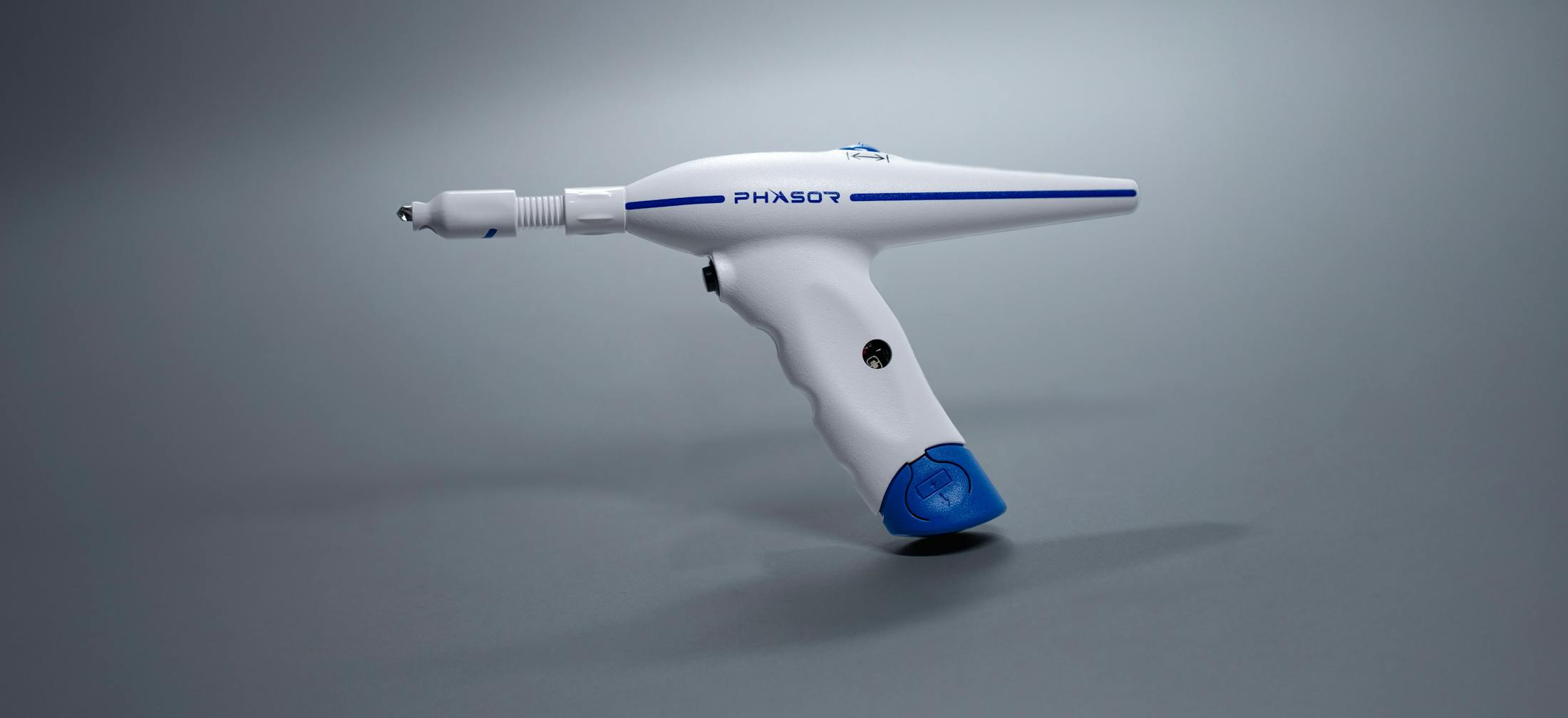
The Phasor Drill is a single-use disposable, battery-operated cranial drill designed for single use during neurosurgical and orthopedic procedures. It helps prevent plunging injuries, eliminates sterilization requirements, and ensures every case begins with a new, sterile device.

What are Cranial Access Kits?

Cranial Access Kits are typically single-use kits, providing the tools (often prep solutions, drapes, instruments, sutures, saline, dressings, etc., though some content variability may occur depending upon the specific kit and geography) needed to perform cranial entry procedures bedside – such as for external ventricular drain (EVD) or intracranial pressure (ICP) monitor placement. Kits are available in both fixed and variable multi-size (2-IN-1, 3-IN-1, 4-IN-1, 5-IN-1) configurations depending upon the variability of which size ICP monitors or drains a hospital needs to place.

What procedures can Phasor systems be used for?

Phasor devices have been utilized for a range of neurosurgical and orthopedic applications, at the discretion of the surgeon, including:

  • Cranial access for EVDs, ICP monitors
  • Evacuation procedures (e.g. subdural hematoma, via Phasor EVAC)
  • Biopsy, LITT, SEEG procedures (longer drills) for frame-based and frameless applications, compatible with as utilized in the past with Medtronic Vertek™, Brainlab Varioguide™, ROSA™ and other systems
  • Spine fixation and orthopedic applications

Are Phasor devices FDA-cleared?

Yes. Phasor devices marketed and used in the United States are FDA-cleared or compliant.  The company was the first known to bring this technology to market, establishing the predicate device for use by others in the field.
Safety and Clinical Performance

How safe are Phasor devices?

Phasor Drills with their anti-plunging stopper now have a track record nearing 30,000 cases (as of end-2025), without any reported plunging incidences with proper use.  Every device undergoes rigorous quality testing before distribution.  This can be compared to reported literature with perforators (Vogel et al) which are “self-stopping drills” citing up to a 0.5% (1 in 200) plunge rate.

What makes the Phasor system safer than traditional drills?

Phasor’s anti-plunge design mechanically limits drill depth and is adjustable to a given patient’s skull thickness, helping prevent inadvertent penetration into brain tissue.

Do Phasor drills require sterilization or maintenance?

No. Each Phasor drill and kit arrives fully sterilized and ready to use. After a single procedure, the device is safely discarded, eliminating the cost and complexity of reprocessing or repair.

Procurement and Implementation

How can hospitals or distributors order Phasor products?

Phasor Health typically supplies directly to hospitals and through authorized distributors. For purchasing information or distribution inquiries, contact: [email protected] or (832) 982-1234.

Is Phasor Health available through GPO contracts?

Yes. Phasor Health is a GPO-credentialed vendor, making its products easily accessible and cost-effective for hospitals participating in major Group Purchasing Organizations.  Examples of such GPOs already contracted include HealthTrust and Premier, with other organizations including military purchasing directly via sam.gov or indirectly via distributors or DAPA.

Does Phasor offer onboarding or training for new users?

Yes. Phasor provides first-time user training, both virtually and on-site. Training includes short instructional videos, printed guides, and/or support from Phasor representatives to ensure smooth integration into hospital protocols.

Cost and Efficiency

Are single-use drills always more expensive than reusable systems?

No. Phasor drills provide a fixed cost per case with no sterilization or maintenance expenses. When those costs are considered, Phasor’s solution is often less expensive than traditional systems.

How does Phasor help reduce hospital downtime?

Each Phasor kit is ready out of the package, with the needed items included without needing to pull “extra items not included” as sometimes occurs with other kits.  For the operating room drills, ready-to-go sterilized and sharp Phasor Drills mean no added setup, sterilization, or repair turnaround time is required. This reduces procedural delays and keeps ICUs, ERs and ORs running that much more efficiently.

How can Phasor Cranial Access Kits or Drills cost LESS than other hand-crank or reusable drill bits?

Phasor makes an effort by self-manufacturing (rather than utilize a middle-person contract manufacturer) whenever possible, manufacturing in the U.S. (to avoid changing tariffs), and keeping the process lean. We negotiate earnestly with suppliers.  This results in more adoption and use of Phasor products nationwide – with less cost to patients, hospitals, insurance companies.

Global Distribution

Where is Phasor Health available?

Phasor is presently serving hospitals across North and South America, with growing distribution networks in Africa and Asia. For region-specific information, visit the Worldwide section of our website.

Does Phasor donate or support hospitals in low-resource regions?

Yes. Phasor partners with surgeons and humanitarian organizations to provide donated systems to hospitals in underserved areas, ensuring safe neurosurgical care is accessible globally.  It carefully evaluates each on a case-by-case basis to determine what is needed, how Phasor products can provide needed resources in the most feasible manner, and in some cases innovates products to meet needs to hospitals, insurance companies, and practically everyone involved!

Support and Contact

How can I request product information or schedule a demonstration?

Please contact Phasor Health directly at [email protected] or call (832) 982-1234. A member of our Phasor Team can either answer the question for you immediately, or connect you with our local representative to assist further.

Where can I find more training materials and videos?

Rather than restate what is eloquently better stated in individual videos and paragraphs elsewhere, we refer you to the Resources section of our site for this information; for further questions, simply contact us and we should be able to provide it quickly!

Contact us media
Accessibility: If you are vision-impaired or have some other impairment covered by the Americans with Disabilities Act or a similar law, and you wish to discuss potential accommodations related to using this website, please contact our Accessibility Manager at (832) 982-1234.
Contact Us